Ideal for customized solutions
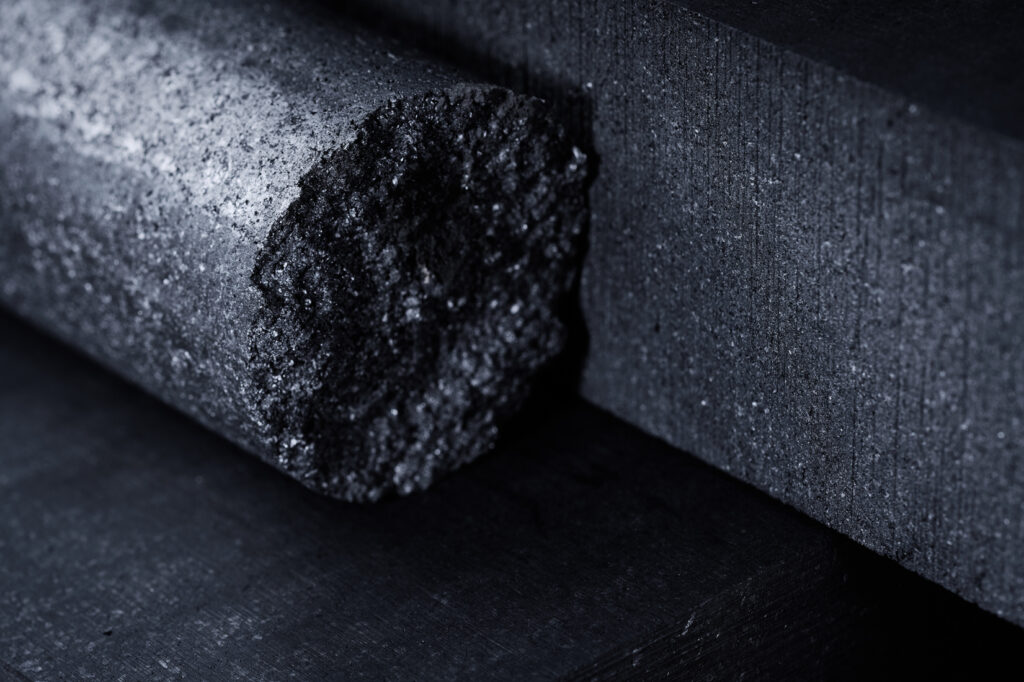
Along with diamond, graphite is one of the natural modifications of the chemical element carbon (C) and is characterized by its typical hexagonal crystal structure. Besides natural graphite, there are also synthetic varieties produced using specialized manufacturing processes and used in numerous industrial applications.
Synthetic graphite is produced by coking and subsequent graphitization of carbons (e.g. coke). Coarse-grained coke is ground and mixed with binders (e.g. pitch). The material is molded using processes such as extrusion, vibratory compression or isostatic pressing. The material has a characteristic hexagonal crystal structure.
Molding processes determine the properties of different graphite types:
Extruded graphite
It is molded into round or square shapes using the extrusion process. The maximum grain size is 0.8 mm and the material properties are direction dependent (anisotropic).
Vibration-compressed graphite
Round or rectangular shapes are produced by vibration and uniaxial pressure. The grain size is 0.3-0.5 mm and the properties are largely direction independent (isotropic).
Isostatic graphite (iso-graphite)
It is compacted from a particularly fine-grained powder (15-30 µm) in a cold isostatic press (CIP). This method produces an isotropic property profile with high flexural strength (about 50 MPa) and a high degree of purity.
All varieties of synthetic graphite share basic properties:
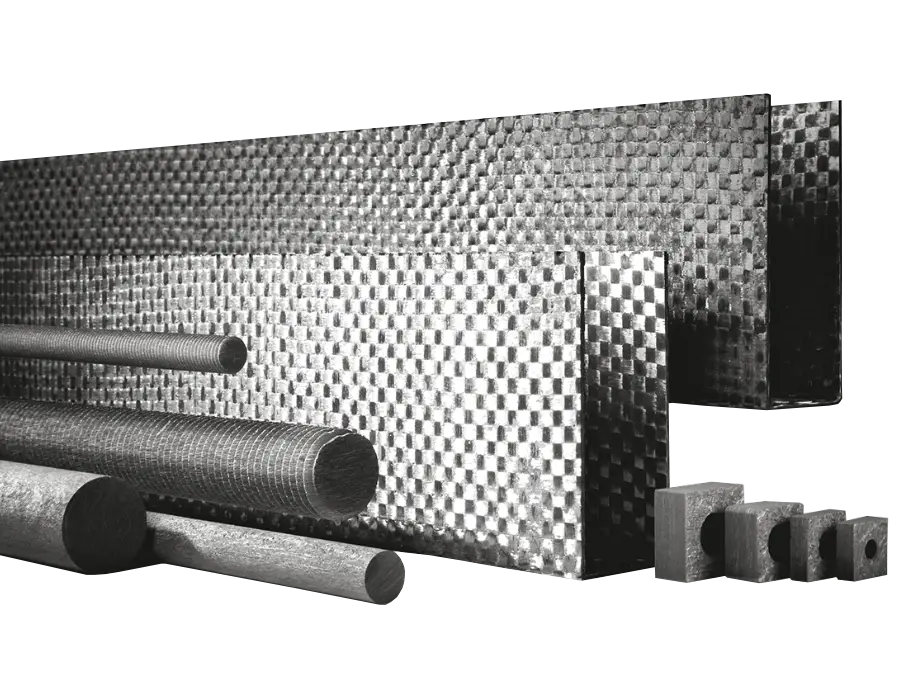
Carbon fiber reinforced carbon (CFC) is a high-strength composite material consisting of carbon fibers embedded in a carbon or graphite matrix. This material is characterized by outstanding mechanical properties, high temperature resistance and low thermal expansion.
The diversity of CFC materials is due to the different types of carbon fibers, their processing into fabrics and the choice of matrix.
CFC production takes place in several stages:
Molding is performed using processes such as hand lamination, hot pressing or winding for sheets and tubes. Precision molded parts can be produced using CNC machining or other mechanical processes.
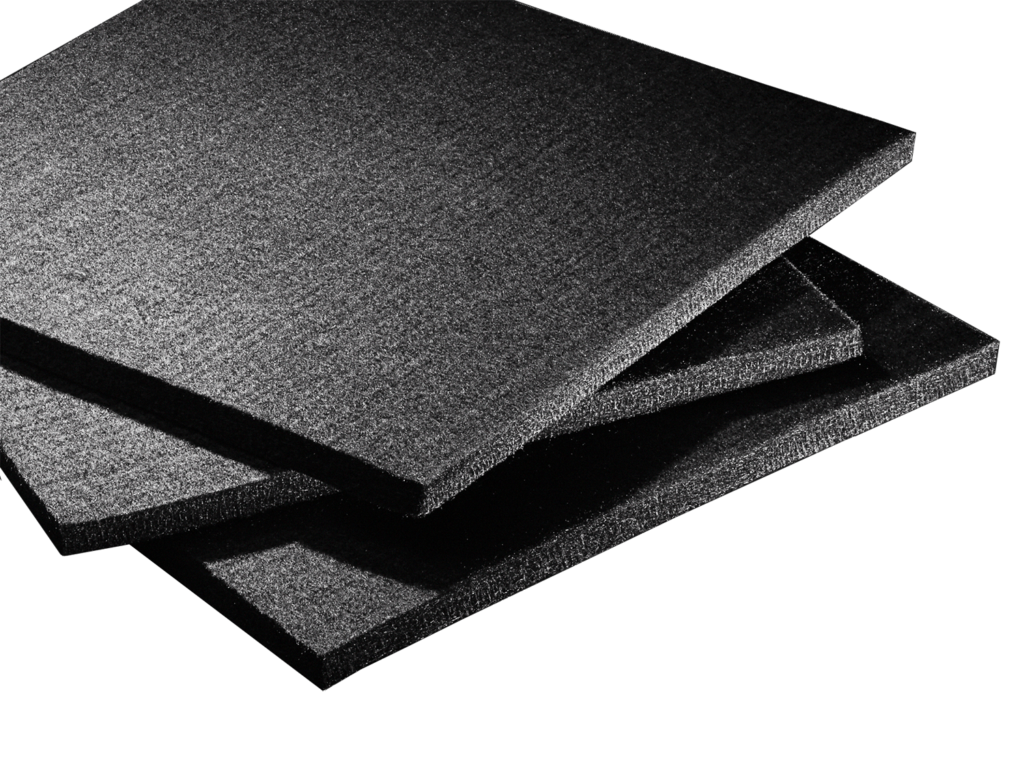
Carbon and graphite soft felts are composed of carbon fibers and are characterized by outstanding thermal, electrical and chemical properties.
They are versatile and particularly suitable for high temperature and special applications.
Production takes place in several steps:
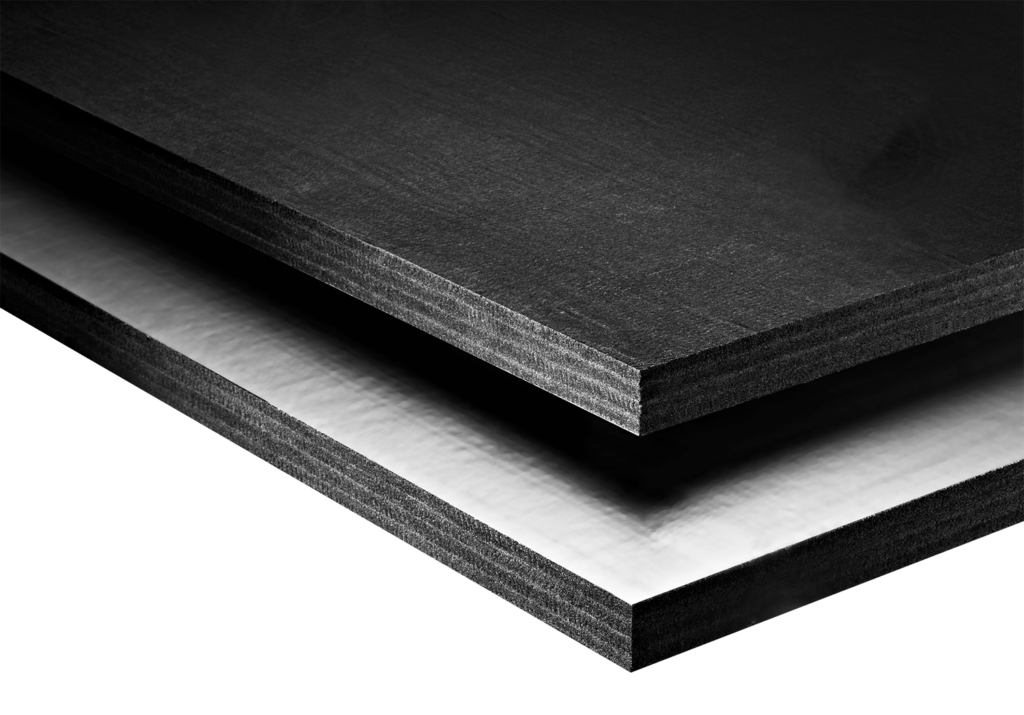
Rigid felts are dimensionally stable insulation materials made of carbon fibers characterized by low thermal conductivity and high temperature resistance.
They are particularly suitable for applications in oxygen-free environments and in vacuum at temperatures above 800 °C.
The production of hard felt takes place in several stages:
This one binding agent provides a reliable fixation of the fibers to the material. Rigid felts are usually produced as sheets, blocks or cylinders, but can be molded into other geometries by mechanical processes.
for improve surface resistance Graphite coatings, CFC fabric or graphite foil can be applied to protect the felt from mechanical damage or chemical attack.
Hard felts share many characteristics with soft felts, but have additional advantages:
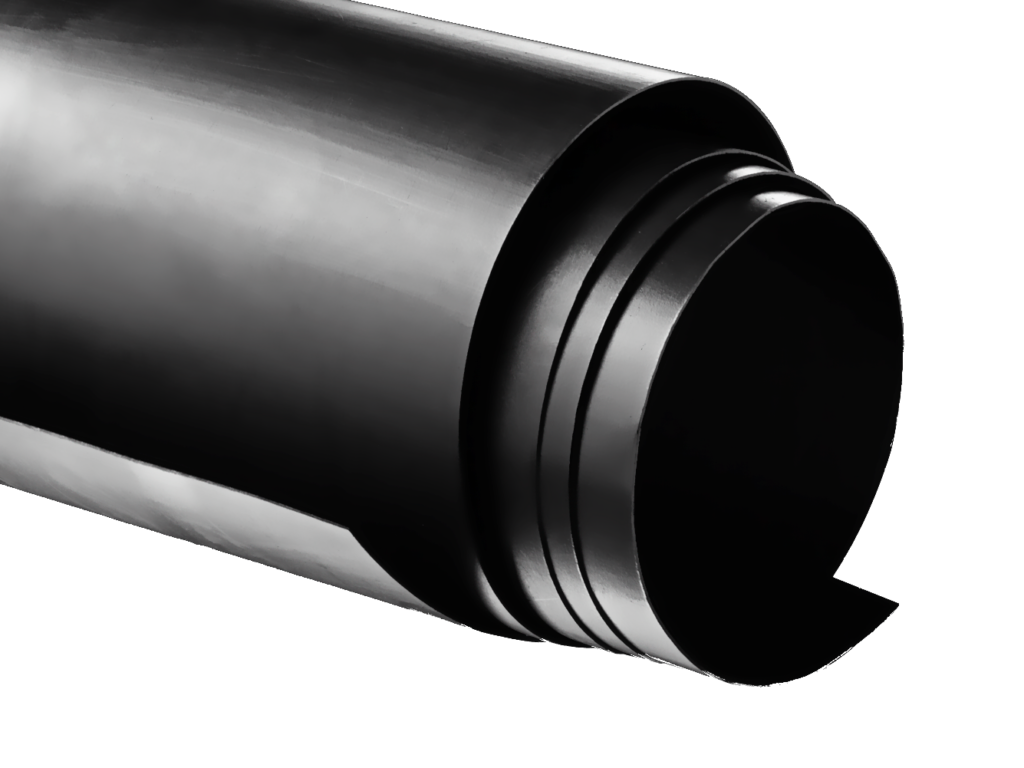
Graphite foil is a material made of natural graphite is produced from natural graphite. After intensive cleaning, the flake-shaped raw material is heat-treated and then formed into foil or sheet.
This mold compression creates an anisotropic structure with direction-dependent properties.
Graphite foil is flexible, compressible and can be easily cut, punched or embossed. It can also be combined with other materials by rolling or bonding to create composite materials with enhanced properties.