When it comes to applying ultra-thin layers to surfaces such as screens, solar cells or semiconductors, there is no getting around the process of sputtering. In this process, a block of material – called a sputtering target – is bombarded with high-energy ions in a vacuum chamber. This releases tiny particles that are then deposited on the surface of the object to be coated. Metals (e.g. aluminium or copper), ceramics or an alloy can be used as the material.
Read here how our Graphite People were able to help produce pressure-resistant sintering molds for the manufacture of sputtering targets and thus significantly optimize the processes.
Share case study:
LinkedIn
Background
Without the use of ultra-thin layers, most modern technologies would not be possible.
For example, touchscreens on displays only work because transparent, conductive layers are applied to the glass. In solar cells, special coatings ensure that light can be efficiently converted into electricity, and semiconductors are also finely coated in the production of microprocessors and memory chips.
The production of sputtering targets is a technically high-precision process.
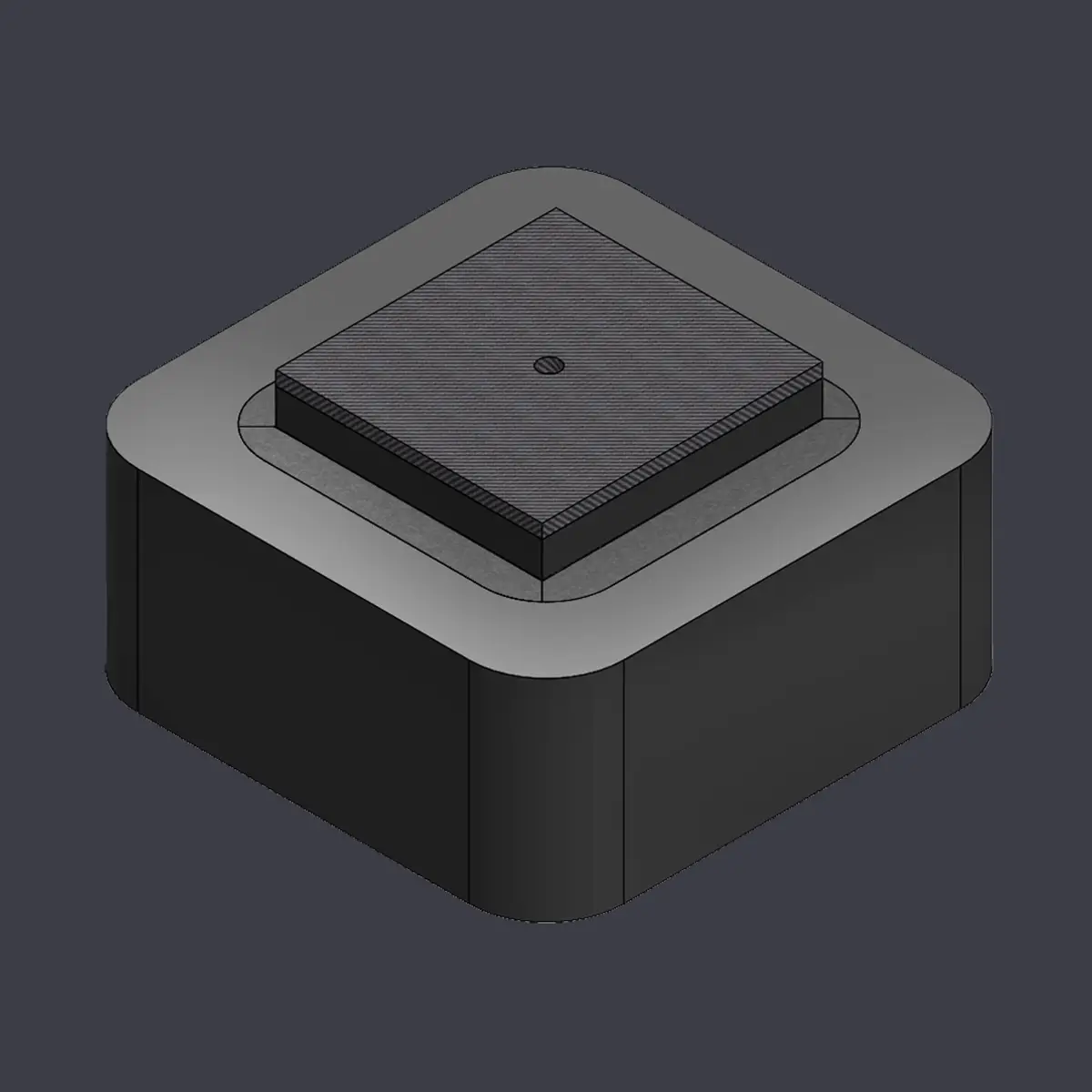
The starting material often consists of a mixture of different powders that are required for the final properties of the target. The powder is filled into an electrically conductive mold (e.g. square plate) and compacted under uniaxial pressure and temperature (Joule heat due to electrical energy). The powder is thus sintered into a solid, in this case a plate, and solidified.
Analysis and simulation, new design, production of sintered moulds
Result:
Increased process stability, quality and reliability as well as output per oven run
The challenge
When it comes to the mechanical stability of the targets, the high thermal and mechanical loads on the mould pose a particular challenge. The mould can crack or warp. For this reason, the powder mould should be designed to be able to absorb induced mechanical and thermal stresses without cracking (multiple use). Likewise, no powder, which is entirely required for the output of the targets, should be lost as a result of pressing via gaps that are required for the demouldability of the target from the mould.
In addition, the raw materials used are extremely expensive and disruptions or interruptions to the process represent a high cost factor.
Process reliability and optimisation, durability and sustainability in recycling at the end of the life cycle are further key challenges.
The specific task: Optimisation of a sintering mould
In the example discussed here, the previous sintering mould could not withstand the pressure caused by the uniaxial pressing – it burst during the furnace run.
The following targets were set for optimisation:
Pressure-resistant sinter mould
Process stability
Maintain the mass and volume of the mould as far as possible
Increased process quality through optimised temperature consistency
Increased output per oven run thanks to maximised filling volume
Prevention of downtimes
Sintering mold overloaded
Process results
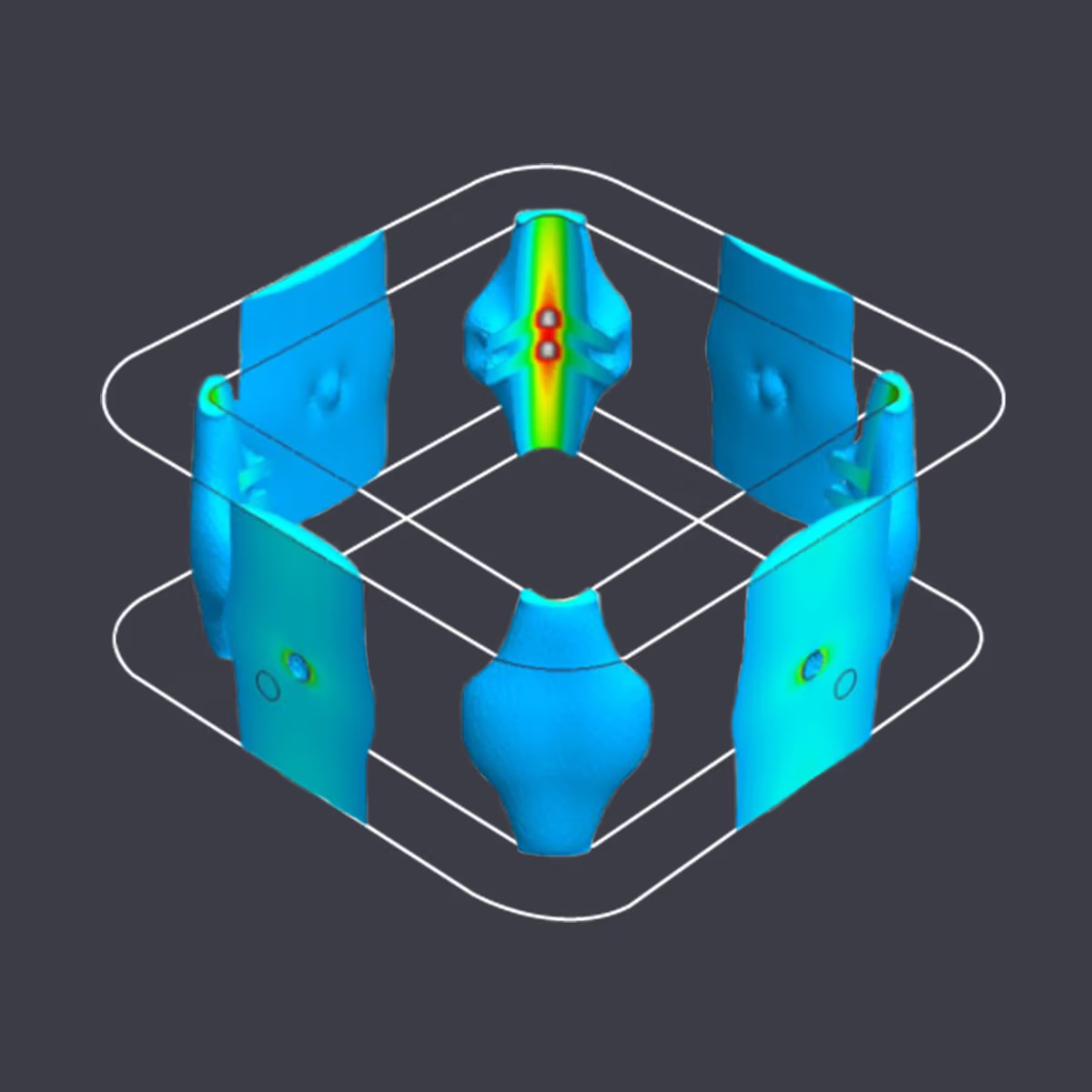
Auf der Basis der vom Kunden gelieferten Daten und der genannten Rahmenbedingungen wie Temperatur und Druck haben wir eine FEM-Simulationdurchgeführt. Dabei konnten wir feststellen, dass eine Veränderung der inneren Eckenradien die beste Option für eine Verbesserung der Form war.
Stable sintered mould
The proposed changes meant that there were no more cracks in the mould and therefore no interruptions in the production process.
Maintain the mass of the sintering mould
The optimisation was achieved without increasing the mass of the mould.
This made the change cost-efficient and effective.
Sintering form optimized
The result
By changing the inner radius, the stresses in the mould could be reduced by 50 %.
The optimization of the mould contour led to a safe and stable process with multiple use of the mould.The material output of the targets was increased by optimizing the gap dimensions,thus increasing theadded value.

 were able to help produce pressure-resistant sintering molds for the manufacture of sputtering targets and thus significantly optimize the processes.