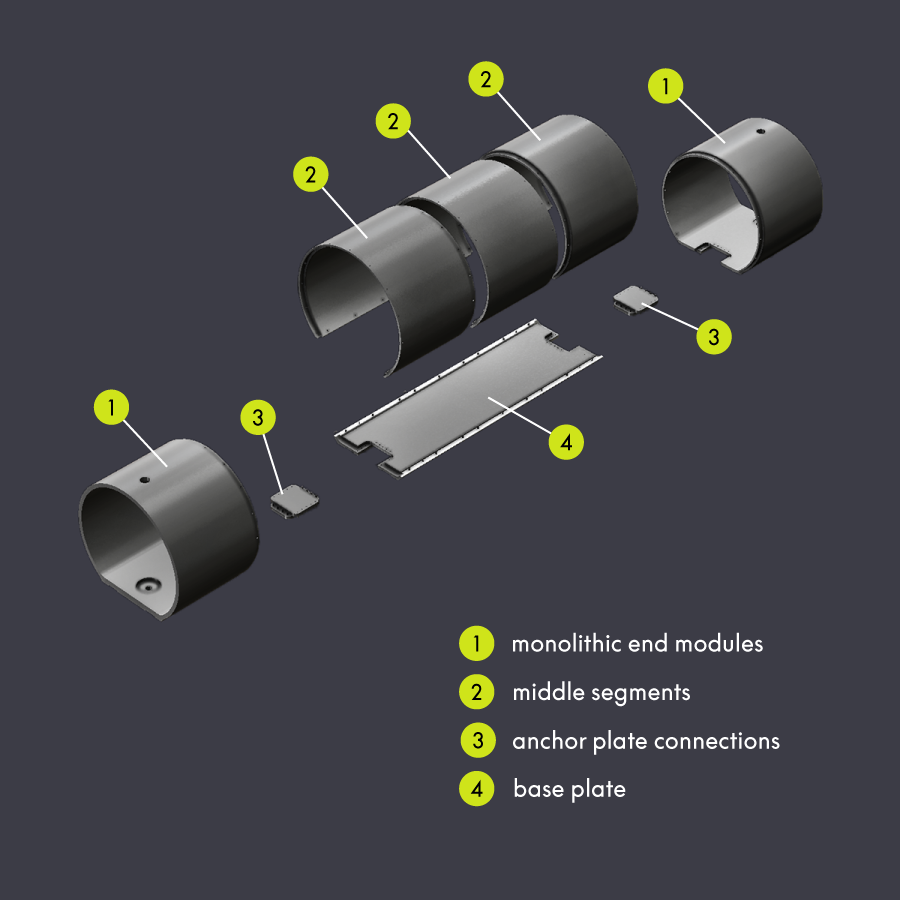
Susceptors (alternatively also known as muffles) are the heart of every heat treatment system and are usually made of robust graphite and CFC . They ensure a homogeneous temperature distribution in the working chamber and thus enable precise, reproducible and energy-efficient heat treatment processes. As large forces act on the areas of the furnace opening when loading and unloading heavy workpieces, they must not only be heat-resistant, but also extremely mechanically resilient. Read here how Graphite Materials has met this challenge.